 admin
admin WEATHER EMERGENCY: The National Weather Service has declared ‘dangerous to record-setting heat’ will expand across the eastern two-thirds of the United States through the July 4 weekend. More than 200 million Americans — two-thirds of the country — are expected to experience dangerous heat. Heat is the deadliest form of extreme weather in the US, killing more Americans annually than hurricanes and tornadoes combined.
The Fourth of July holiday weekend — typically one of America’s most joyful celebrations — is this year arriving under a weather warning unlike anything in recent memory. A massive heat dome, described by the National Weather Service as ‘potentially historic,’ has settled over the central and eastern United States, and will intensify through Thursday and Friday before any relief arrives. If you have outdoor plans for July 4, you need to read this article before you go.
What Is a Heat Dome and Why Is It So Dangerous?
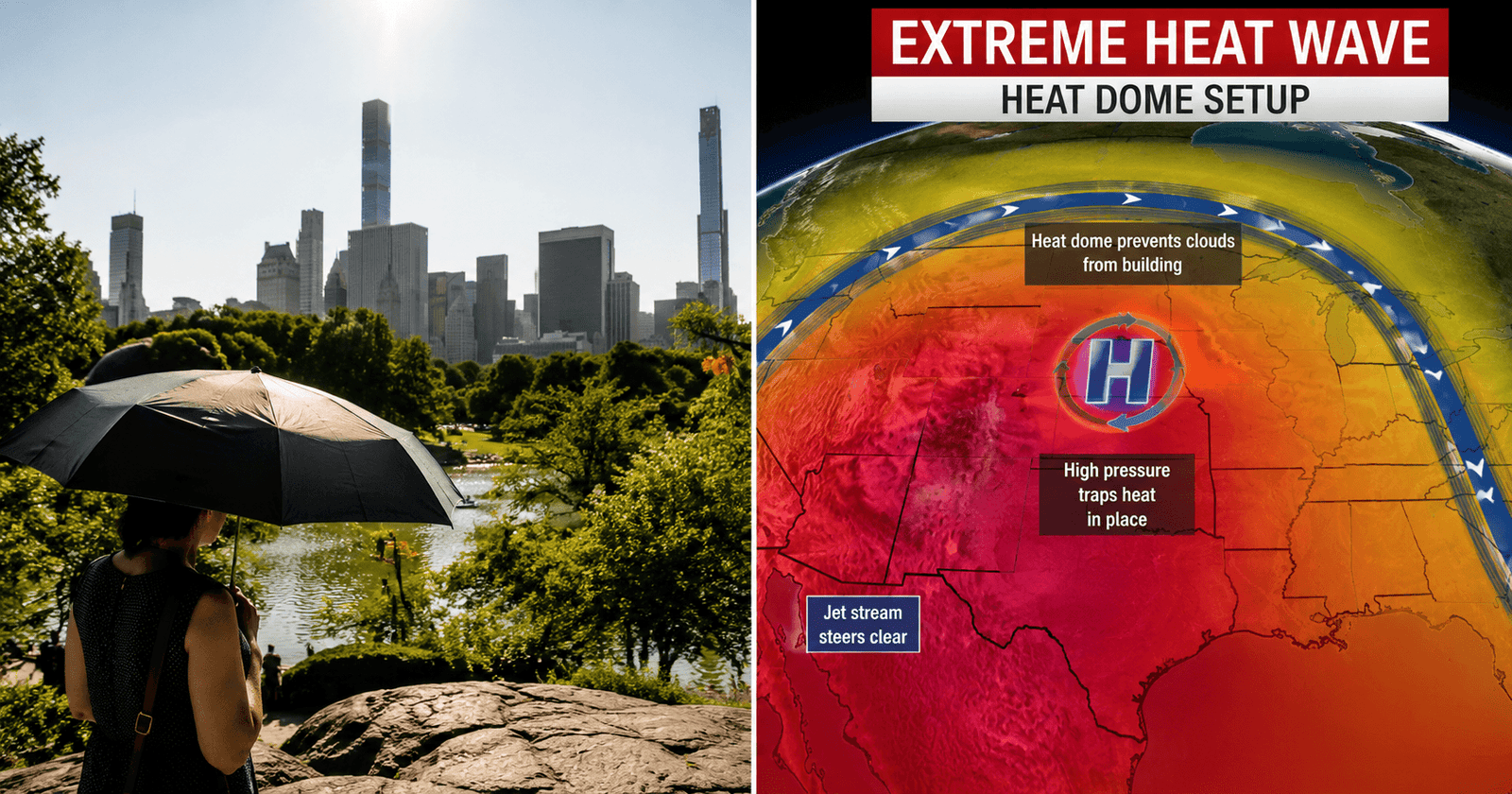
A heat dome occurs when a large, powerful area of high atmospheric pressure parks over a region and acts as a lid, trapping hot air beneath it and preventing it from rising and dispersing. As the high-pressure system strengthens, it compresses and heats the air below, allowing temperatures to build over several days while blocking the clouds and rainfall that would normally provide relief. Heat domes can last for days or even weeks.
What makes this particular heat dome especially dangerous is the combination of extreme temperatures and very high humidity. High humidity prevents the body’s primary cooling mechanism — sweating — from working effectively. When sweat cannot evaporate, body temperature rises rapidly. The National Weather Service’s heat index — what the temperature ‘feels like’ when humidity is factored in — is forecast to reach 100 to 115 degrees Fahrenheit across large parts of the country, even where actual air temperatures may be in the low to mid-90s.
Which States Are Worst Affected? Your City-by-City Guide
The National Weather Service has placed more than 30 states under some form of heat advisory, heat watch, or extreme heat warning. The most dangerous conditions are concentrated in:
- Midwest: Chicago, Detroit, Indianapolis, Columbus, Cleveland, St. Louis, Minneapolis, Milwaukee — heat indices 100-108°F through July 4
- Mid-Atlantic: Washington DC, Philadelphia, Baltimore, Pittsburgh — heat indices 105-112°F, ‘especially threatening for elderly and those with respiratory issues’
- Southeast: Nashville, Atlanta, Charlotte, Raleigh — heat indices 100-110°F, with Raleigh forecast for a ‘severe’ heat wave ranking on the AccuWeather Severity Index
- Northeast: New York City, Boston — Strong heat wave June 30-July 5, with NYC heat index above 95°F for five consecutive days
- South: Louisville, Memphis, Birmingham, Columbia SC — multiple days of heat indices above 100°F
Overnight temperatures will offer little relief, with the NWS warning of ‘some record high minimum temperatures possible, bringing little to no relief from the heat in the nighttime hours.’ This is a critical factor — the body needs overnight temperatures to drop to recover from daytime heat exposure.
The Death Risk Is Real — Who Is Most Vulnerable
Extreme heat kills more Americans every year than any other type of natural disaster. In a heat dome of this scale and intensity, deaths from heat-related illness are a near-certainty. Those most at risk include: people aged 65 and older, whose bodies are less efficient at regulating temperature; infants and young children; people with chronic conditions including heart disease, diabetes, respiratory illness, and kidney disease; people who work outdoors including construction workers, agricultural workers, and — tragically — the wildland firefighters already battling historic blazes in Utah and Colorado; people in low-income households who cannot afford air conditioning; and people experiencing homelessness.
Life-Saving Heat Safety Tips — Read These Before You Go Outside
Hydration — Your Most Important Defense
Drink water constantly — even before you feel thirsty. Thirst is a lagging indicator of dehydration; by the time you feel thirsty in extreme heat, you are already mildly dehydrated. Aim for at least 3-4 liters of water per day during extreme heat. Avoid alcohol and caffeinated drinks, which accelerate dehydration. Sports drinks with electrolytes (sodium, potassium) help replace what you lose through sweat, but should supplement water rather than replace it.
Time Your Outdoor Exposure
Avoid being outdoors between 11am and 4pm — the peak heat hours. If you must be outside, take regular breaks in shade or air conditioning every 20-30 minutes. Never leave children, elderly people, or pets in a parked car, even with windows cracked — car interiors can reach 140°F within minutes.
Cool Your Home
If you have air conditioning, use it — and set it to no higher than 78°F. If you do not have air conditioning, keep curtains and blinds closed during the day to block sunlight. Open windows and doors during the coolest hours (late night and early morning). Take cool showers or baths. Place ice packs or cold wet towels on pulse points — wrists, neck, armpits — for rapid cooling.
Recognize the Emergency Signs
Heat exhaustion symptoms: heavy sweating, cool and pale skin, weakness, nausea, headache, dizziness, fainting. Treatment: move to a cool place, drink water, apply cool wet cloths.
Heat stroke (medical emergency): High body temperature above 103°F, hot and red skin, NO sweating, rapid and strong pulse, confusion. Call 911 immediately. Heat stroke can cause permanent organ damage or death if not treated within minutes.
Should You Cancel Your July 4 Plans?
Not necessarily — but you must adjust them. Keep outdoor celebrations short. Make sure everyone has water. Plan activities during early morning or evening hours. Have a cool indoor space where people can retreat. Check on elderly neighbors and family members. Keep pets indoors.
Local governments are opening cooling centers across the affected states. Find your nearest cooling center by calling 211 or checking your local government’s website.