 admin
admin Every year, the July 4 holiday weekend is one of America’s busiest and most anticipated travel and celebration periods. Millions of Americans hit the road, fire up the grill, and gather with family and friends to celebrate Independence Day. In 2026, however, the July 4 weekend is arriving with a set of converging weather hazards that make it the most dangerous holiday weekend in recent memory — and that require every American with outdoor plans to think carefully and prepare seriously.
Here is your complete guide to everything you need to know before you travel or celebrate this Fourth of July.
Hazard 1: The Heat Dome — The Main Threat
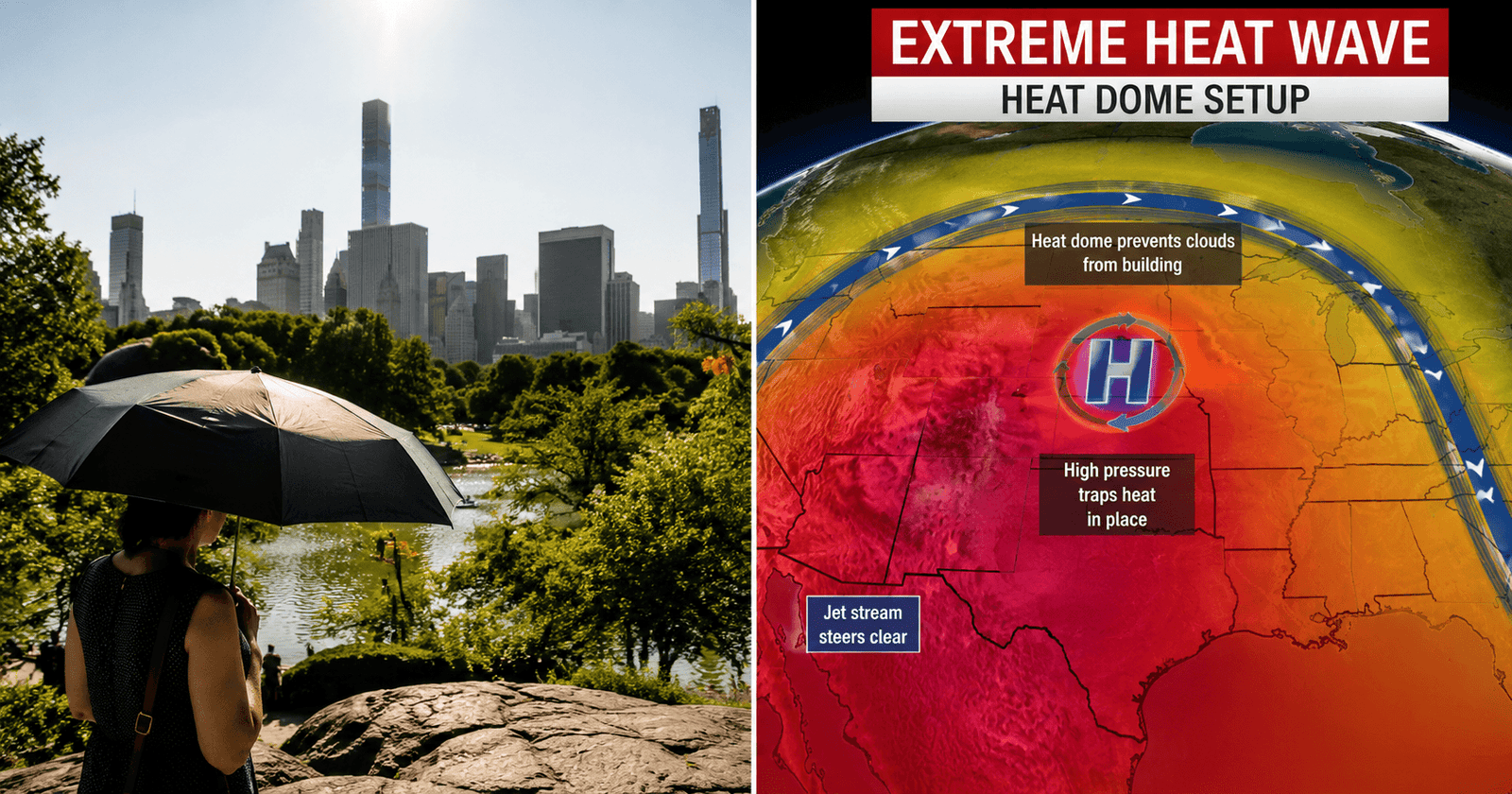
The biggest danger this weekend is also the most invisible one. The heat dome that has settled over the central and eastern United States is not dramatic in the way a tornado or a hurricane is dramatic — it does not have visible destructive power. But it is already killing people, and it will kill more through the holiday weekend if people are not prepared.
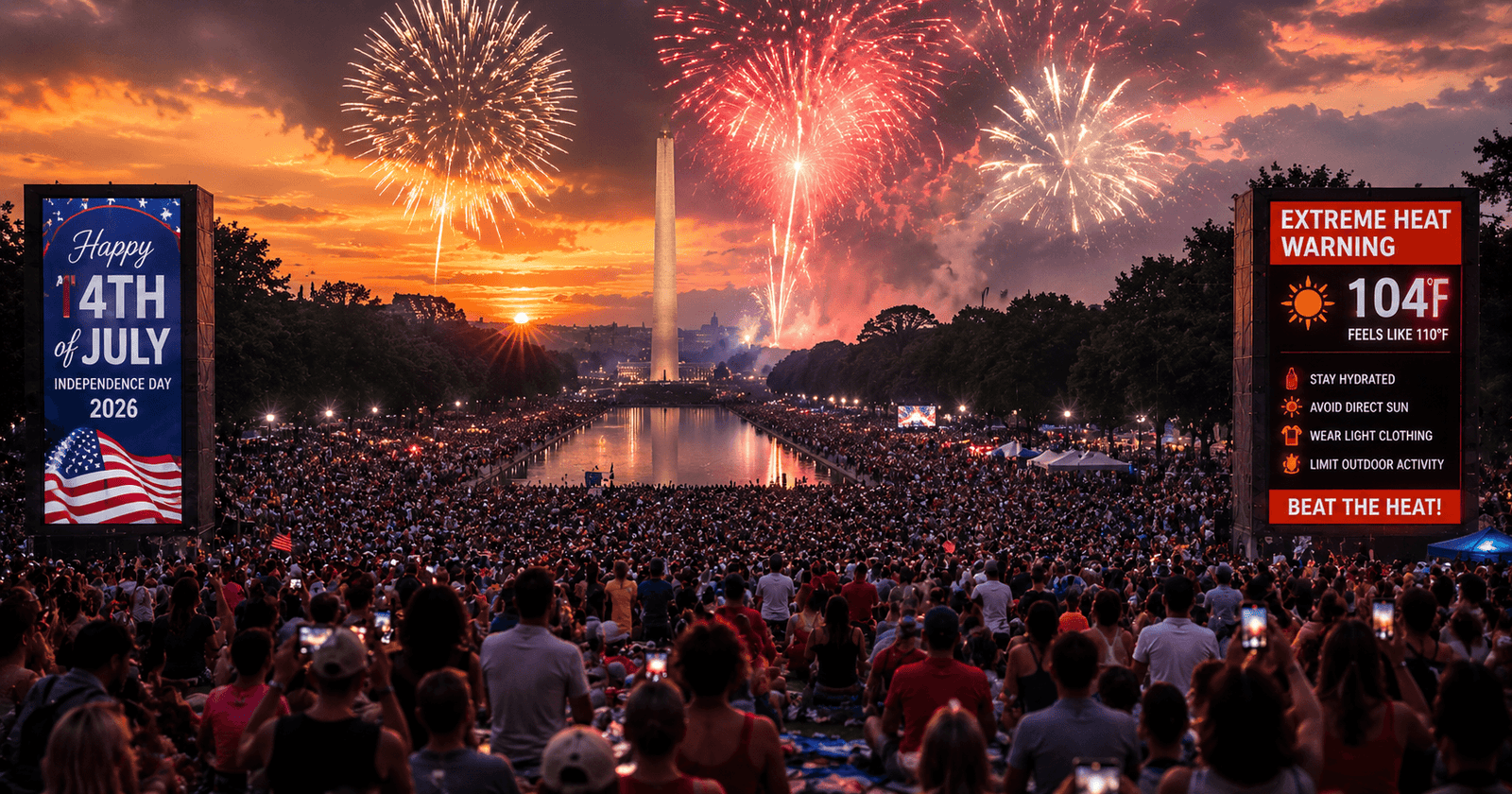
More than 200 million Americans — two-thirds of the country — are under some form of heat alert as of June 29. The heat index is expected to reach 105 to 115 degrees Fahrenheit in many areas. The worst conditions are expected on Thursday July 3 and Friday July 4 before any gradual relief begins over the holiday weekend. Cities including Chicago, New York, Philadelphia, Washington DC, Nashville, Atlanta, and dozens of others are all under significant heat risk.
The dangerous element for July 4 celebrators is the combination of prolonged outdoor exposure, physical activity, alcohol consumption (which dehydrates), and the heat’s tendency to worsen through the afternoon and early evening — exactly when most fireworks celebrations and outdoor gatherings peak.
Hazard 2: Wildfires in the West
If you have travel plans to Utah, Colorado, Arizona, or nearby states this holiday weekend, the wildfire situation requires your attention. The Cottonwood Fire has burned more than 144 square miles in southwest Utah and is the largest wildfire in the United States. The Snyder Fire covers 28,000 acres along the Colorado-Utah border. The Babylon Fire has forced the closure of the Needles district of Canyonlands National Park — one of Utah’s most iconic destinations.
Utah Governor Spencer Cox has implemented statewide fireworks restrictions ahead of the July Fourth holiday due to the extreme fire danger. Anyone planning to use personal fireworks in Utah should check local restrictions before doing so — violations carry significant fines and, more importantly, risk starting catastrophic fires in conditions where even a small spark can grow into a massive blaze within hours.
Smoke from Utah and Colorado fires is also affecting air quality across a wide region. People with respiratory conditions, the elderly, and children should monitor air quality index readings and limit outdoor exposure when air quality is poor. The AirNow app provides real-time air quality information by location.
Hazard 3: Severe Thunderstorms
As the heat dome shifts and weakens later in the weekend, it is likely to trigger severe thunderstorm activity across the northern Plains and parts of the Midwest. These storms can produce damaging winds, large hail, and tornadoes — hazards that are particularly dangerous for people camping or at outdoor events. The NWS expects a ‘ring of fire’ of severe thunderstorms to develop as the heat dome moves. Check local weather forecasts repeatedly throughout the weekend and have a shelter plan if storms develop.
Hazard 4: The Simultaneous Wildfire Smoke and Heat
In parts of the West, the combination of wildfire smoke and extreme heat creates a uniquely difficult situation. The smoke irritates the lungs and reduces the body’s ability to cool itself efficiently, while the heat simultaneously stresses the cardiovascular system. For outdoor workers, hikers, and anyone planning vigorous outdoor activity in smoke-affected areas, the combination creates a significantly elevated health risk.

Your July 4th Safety Checklist
- Check your local heat advisory level at weather.gov before leaving home
- Identify the nearest air-conditioned public space (library, mall, cooling center) to your event location
- Bring at least 1 liter of water per person per hour of outdoor activity
- Plan all outdoor activities for early morning (before 10am) or evening (after 7pm)
- Check fireworks restrictions in your area — many counties have bans due to wildfire danger
- Monitor air quality at airnow.gov if you are in or near smoke-affected areas
- Know the signs of heat exhaustion and heat stroke — and know to call 911 for heat stroke
- Never leave children, elderly people, or pets in parked vehicles — ever
- Check road closures near national parks in Utah and Colorado before driving
- Have a severe weather shelter plan if attending outdoor events in the Midwest or Plains
Is It Safe to Travel to National Parks This Weekend?
Several national parks in Utah and the Southwest are affected by current fire conditions. As of June 29, the Needles district of Canyonlands National Park is closed due to the Babylon Fire. Arches, Zion, and Bryce Canyon are open but under air quality advisories. Check the National Park Service’s website (nps.gov) for real-time closure and advisory information before any Southwest national park visit.
For those traveling to eastern national parks — Shenandoah, Great Smoky Mountains, Acadia, and others — the primary hazard is the heat dome rather than wildfires. Plan hikes for early morning, carry extra water, and know that elevation does not fully protect against extreme heat in a dome of this magnitude.
The Good News: You Can Still Celebrate Safely
None of this means you should cancel your Fourth of July celebrations. It means you should celebrate smart. Move activities earlier in the day. Set up shaded areas. Make water as prominent as everything else at your gathering. Check on elderly neighbors and family members. And if severe weather develops, do not hesitate to move celebrations indoors.
The July 4th holiday is a time to celebrate together. With some simple preparation and awareness, you can do it safely. Stay cool, stay hydrated, and have a wonderful Independence Day.
Sources for this article: AccuWeather, National Weather Service, US Forest Service, National Park Service, NPR, CBS News, NBC News — June 29, 2026