 admin
admin BREAKING: Iran launched drone and missile attacks against Bahrain and Kuwait on June 28, 2026, in retaliation for US airstrikes against Iranian targets. Bahrain is home to the US Fifth Fleet. Kuwait hosts major American military assets. These are the first direct Iranian attacks on Gulf Arab states since the ceasefire was signed.
In a dramatic and alarming expansion of the US-Iran conflict, Iranian forces launched drone and missile attacks against Bahrain and Kuwait on June 28, 2026 — two of the United States’ closest allies in the Persian Gulf and two of the most strategically significant nations in the Middle East. The attacks represent a direct Iranian threat to the US military presence in the Gulf and a deliberate message to Arab states that have so far maintained a careful distance from the conflict.
Why Bahrain and Kuwait? The Strategic Logic
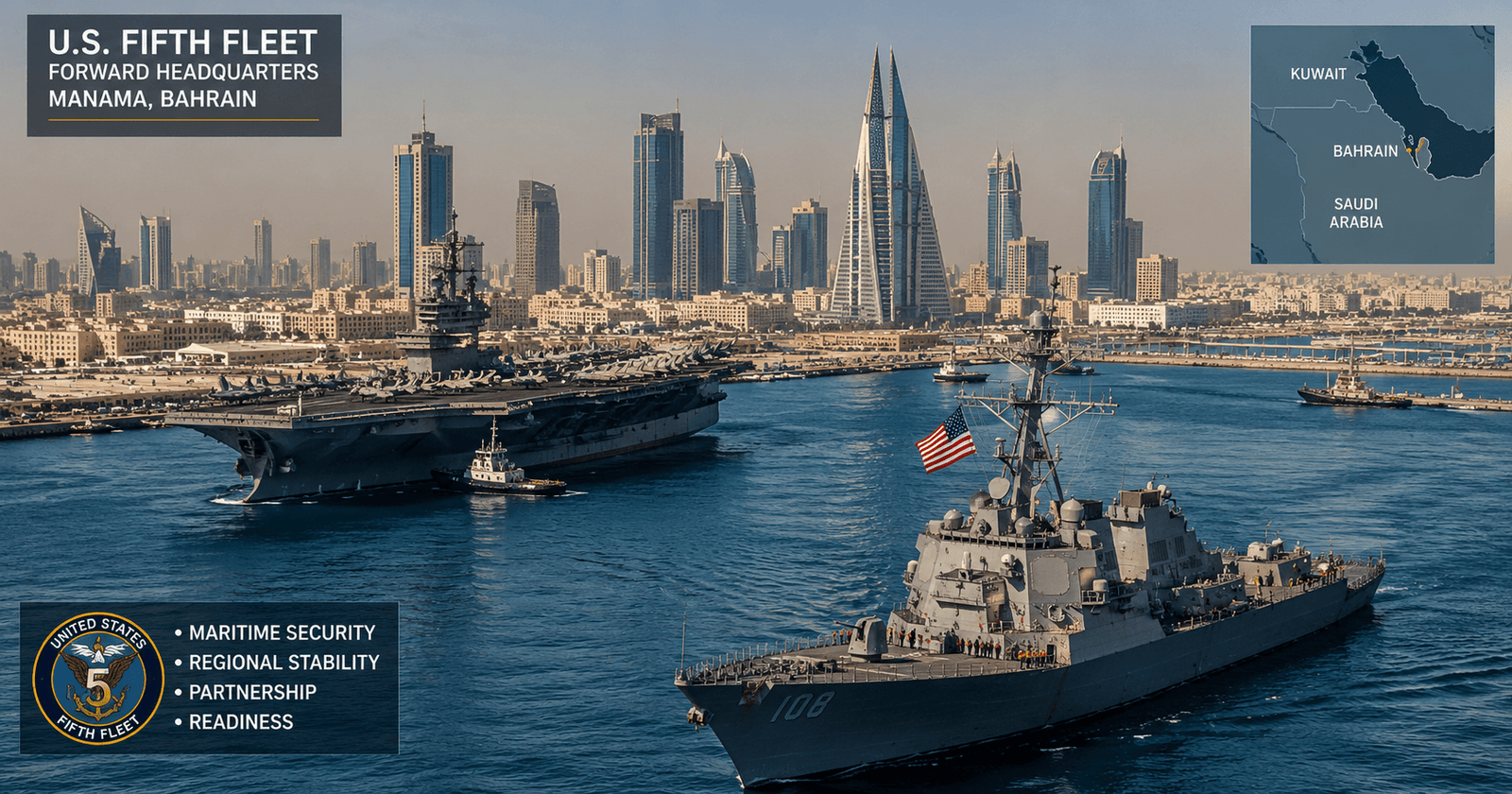
Bahrain is host to the US Fifth Fleet — the most powerful American naval force in the Middle East. From its base in Manama, Bahrain, the Fifth Fleet projects American military power across the Persian Gulf, the Red Sea, and the Indian Ocean. Attacking Bahrain sends the clearest possible message to Washington about Iran’s willingness to threaten American military infrastructure across the region.
Kuwait, similarly, hosts thousands of American military personnel and serves as a critical logistics hub for US forces operating in the Middle East. Kuwait was the country from which US forces launched operations in both the 1991 Gulf War and the 2003 Iraq War. For Iran to target Kuwait is a signal of willingness to challenge the entire US military infrastructure in the Gulf — not just to defend its own territory.
The Sequence of Events on June 28
The June 28 drone attacks on Bahrain and Kuwait followed a clear retaliatory logic. US Central Command conducted its second round of airstrikes against Iranian targets on June 28, following the first strikes on June 26 that had responded to Iran’s attack on the cargo ship M/V Ever Lovely. Iran’s IRGC announced it was targeting US-affiliated Gulf states in direct retaliation for the American strikes on Iranian soil.
Bahrain’s government confirmed Iranian drones struck the Gulf state, describing the attacks as an act of aggression and summoning Iran’s diplomatic representative to demand an explanation. Kuwait’s authorities also confirmed the attacks on their territory. Both governments called emergency security meetings and consulted with their US military allies.
The Gulf Cooperation Council Dimension
The attacks on Bahrain and Kuwait are threatening to draw the entire Gulf Cooperation Council — Saudi Arabia, UAE, Qatar, Kuwait, Bahrain, and Oman — into a more direct confrontation with Iran. Secretary of State Rubio had visited the Gulf before the current escalation, meeting with GCC leaders at Al-Sakhir Palace in Bahrain to discuss the Iran situation. The GCC states had been cautiously welcoming of the US-Iran ceasefire framework, hoping it would reduce the regional instability that was damaging their economies and development plans.
Iranian attacks on GCC member states are a direct threat to that regional stability agenda. Saudi Arabia and the UAE in particular have been pursuing ambitious economic diversification programs — Saudi Vision 2030 and UAE’s various development strategies — that depend on a stable regional environment. Iranian escalation directly threatens those plans.
International Reactions
The United States condemned the attacks as ‘an unacceptable escalation’ and pledged to defend its allies and military assets in the region. The UK and France issued statements condemning the attacks and calling for de-escalation. The UN Security Council was convened for an emergency session.
Arab League Secretary-General Ahmed Aboul Gheit called the attacks on fellow Arab states ‘a grave violation of national sovereignty and a dangerous threat to regional peace.’ The Organization of Islamic Cooperation also condemned the attacks.
What This Means for the Peace Process
The attacks on Bahrain and Kuwait represent the most serious expansion of the conflict since the initial US-Israeli strikes on Iran in February 2026. They signal that Iran is willing to threaten not just US military positions but the broader US alliance system in the Gulf — a much more aggressive posture than attacking American forces directly. The question now is whether this escalation can be contained before it triggers a response that definitively ends any hope of a negotiated peace